
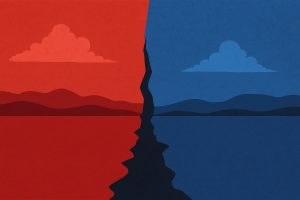
The Depth of Partisan Polarization
Partisan polarization in America has reached historic highs. Both the public and political elites are more divided along party lines than at any time in recent decades. According to recent surveys, more than 80% of Americans believe that Republicans and Democrats are more focused on fighting each other than on solving the country’s problems 1. This sentiment is echoed in Congress, where voting patterns show members consistently aligning with their party, often at the expense of bipartisan cooperation and effective governance 2.
Consequences for Governance and Lawmaking
This entrenched partisanship has led to legislative gridlock, where the passage of meaningful legislation has become increasingly rare. The current Congress is on track to be one of the most unproductive in history, passing only a handful of laws and failing to address urgent issues such as climate change, healthcare, and foreign policy crises 3. The inability to compromise and negotiate across party lines has paralyzed the legislative process, leaving critical problems unresolved and eroding public confidence in democratic institutions 2,3.
Administrative Inefficiency and Public Disillusionment
The effects of partisan politics extend beyond Congress. Administrative inefficiency, as seen during crises like the COVID-19 pandemic, has been exacerbated by political infighting and the prioritization of party interests over national well-being4. Americans overwhelmingly believe that important issues receive too little attention, while partisan conflicts dominate the political discourse 1.
The Influence of Special Interests
Partisan gridlock is further compounded by the large influence of special interests and major campaign donors. A vast majority of Americans believe that big donors and lobbyists hold too much sway over lawmakers, while ordinary citizens have too little influence 1. This dynamic reinforces partisanship, as politicians become more beholden to their financial backers and less responsive to the broader electorate.
A Vicious Cycle of Gridlock and Polarization
Research suggests that legislative gridlock and polarization feed off each other, creating a vicious cycle that is difficult to break. As Congress becomes more polarized and less productive, moderate voters and politicians are pushed to the margins, further entrenching extreme positions and making compromise even less likely 3.
Conclusion
The U.S. political system is mired in partisan politics to such an extent that it is struggling to function as intended. Deep divisions, legislative paralysis, administrative inefficiency, and the pervasive influence of special interests have combined to undermine effective governance and erode public trust. Until these structural issues are addressed, the nation will continue to face significant challenges in meeting the needs of its citizens and upholding the ideals of its democracy 1,2,3.
- https://www.pewresearch.org/politics/2023/09/19/americans-dismal-views-of-the-nations-politics/
- https://lawslearned.com/impact-of-partisan-politics/
- https://www.promarket.org/2024/06/26/is-a-gridlocked-congress-causing-more-polarization/
- https://news.cgtn.com/news/2020-08-14/Partisan-politics-drags-U-S-towards-failed-state-status-SRR4uGRIwo/index.html
- https://righteousmind.com/the-causes-of-political-dysfunction/
- https://carnegieendowment.org/research/2023/09/polarization-democracy-and-political-violence-in-the-united-states-what-the-research-says?lang=en
- https://www.columbialawreview.org/content/congressional-polarization-terminal-constitutional-dysfunction-2/
- https://www.psu.edu/news/research/story/political-polarization-may-slow-legislation-make-higher-stakes-laws-likelier
- https://www.brookings.edu/articles/political-dysfunction-and-economic-decline/
- https://pressbooks.online.ucf.edu/pos2041lg/chapter/divided-government-and-partisan-polarization/
- https://immattersacp.org/archives/2014/10/washington.htm