
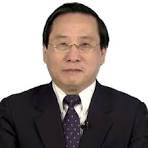
Victor Gao is one of the most prominent Chinese voices in global media, often seen defending China’s policies and presenting Beijing’s worldview to international audiences. While not an official government spokesman, Gao plays a key unofficial role in shaping global perceptions of China—thanks to his unique blend of insider experience, academic rigor, and cultural fluency.
Born in 1962 in Suzhou, Gao first gained prominence as the English interpreter for Deng Xiaoping during China’s reform era in the 1980s. He later earned degrees from Beijing Foreign Studies University and Yale University, including a Juris Doctor from Yale Law School, and became a licensed attorney in New York. He has worked in diplomacy, law, finance, and academia, and now serves as Vice President of the Center for China and Globalization (CCG), a Beijing think tank.
Gao’s effectiveness as an unofficial spokesman stems largely from his ability to communicate Chinese positions clearly and persuasively in fluent English, often appearing on platforms like CNN, BBC, Al Jazeera, and CGTN. Unlike many Chinese officials who stick to rigid talking points, Gao debates fluidly, using Western legal and political concepts to explain China’s actions on issues like Taiwan, Xinjiang, trade, and the South China Sea.
He often frames China’s positions within global narratives—emphasizing sovereignty, post-colonialism, and Western hypocrisy. For example, when confronted with criticisms of China’s human rights record, he frequently responds by pointing to U.S. interventions abroad or domestic inequalities, a strategy that resonates with audiences critical of Western double standards.
Gao’s credibility is enhanced by his impressive resume and international experience, which allow him to present himself as an independent intellectual rather than a government agent. He often stresses that his views are his own, even if they closely align with official policy. His willingness to engage in unscripted interviews and debates—especially in Western media—sets him apart from more cautious Chinese figures.
However, his visibility also attracts criticism. Many accuse him of being a propagandist who cloaks authoritarian policies in legalistic language and avoids directly addressing the core issues. His frequent use of whataboutism—diverting criticism of China by highlighting Western flaws—can weaken his moral argument, even if it succeeds rhetorically.
In sum, Victor Gao is not China’s official voice, but he is arguably one of its most effective international advocates. He represents a new form of Chinese soft power: multilingual, media-savvy, and capable of engaging the world on its own terms. In an era of intensifying U.S.-China rivalry, voices like Gao’s offer a glimpse into how China is learning to win battles not just through policy or power, but through persuasion.